As a product designer, AI changed the way I work and the way I relate to my work. It's not just about MCP ports or delivering projects 80% faster. It's about having the time (and the tokens) to try something new.
A couple of months ago, trying something new was expensive. A new version? A redesign? That meant two weeks of creating new button styles, fixing broken design system tokens and chasing silly problems. If I'm being honest, product design was 90% monkey work around the design and 10% actually designing. The agentic era changed that equation completely. Instead of spending days making sure every frame has the same corner radius, I can now fix that across a whole system in two seconds, at a scale we never had before. The 90/10 split is flipping, so I can explore more, in less time, at a fraction of the cost.
So one calm afternoon I had an idea: what if I used that reversed 90/10 to build something with AI that actually looks like a product, works, and is fun?
That's how Crust Criminal happened.
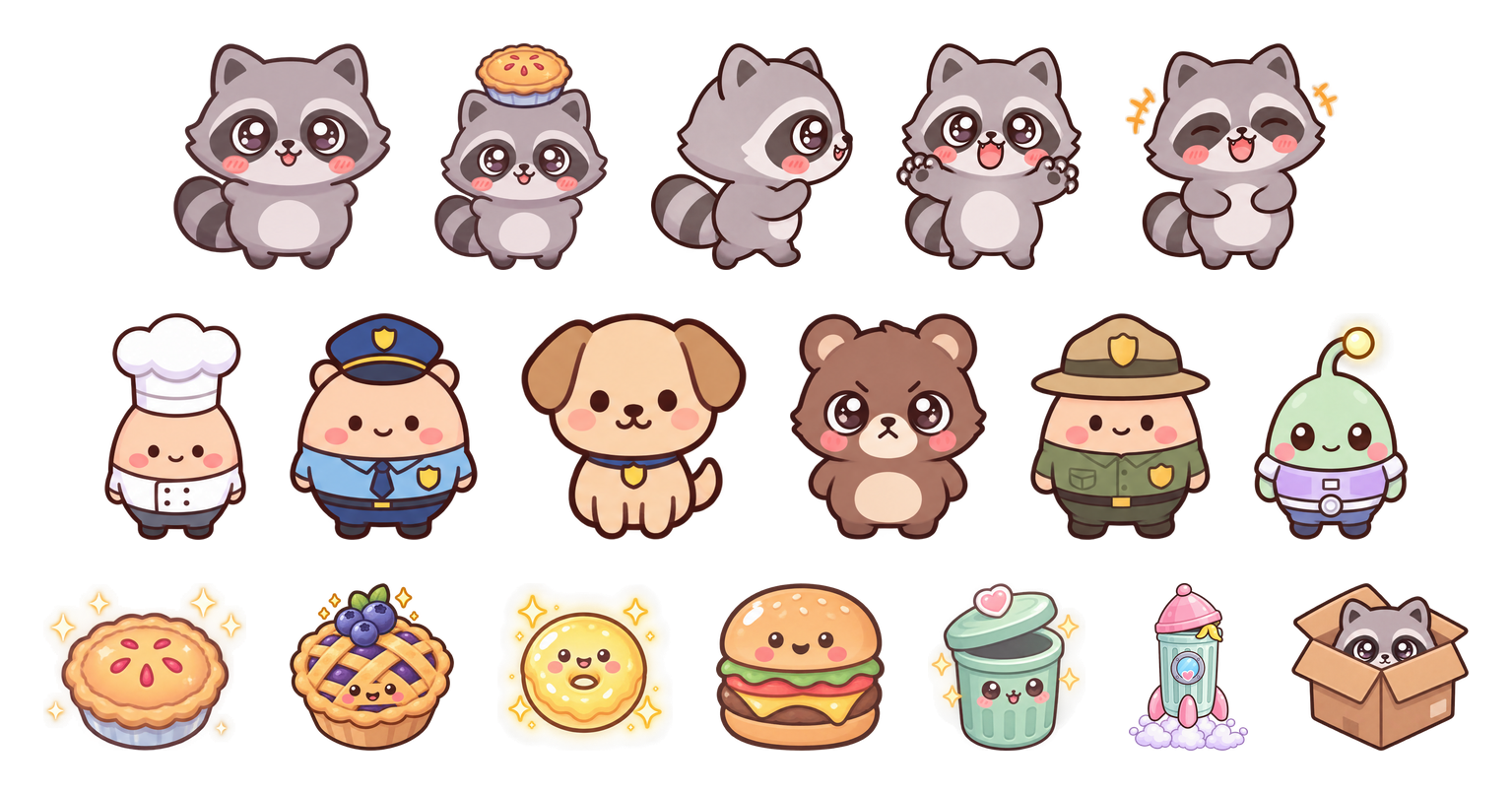
It started as a silly thought. What if a raccoon was the world's most dedicated pie thief? Nothing scary, just a chubby, kawaii little criminal in a tiny mask, sneaking through a kitchen toward a cherry pie before anyone notices. I liked the idea of making something small and cute that still had real tension in it, like that moment when you hold your breath because someone is about to turn around.
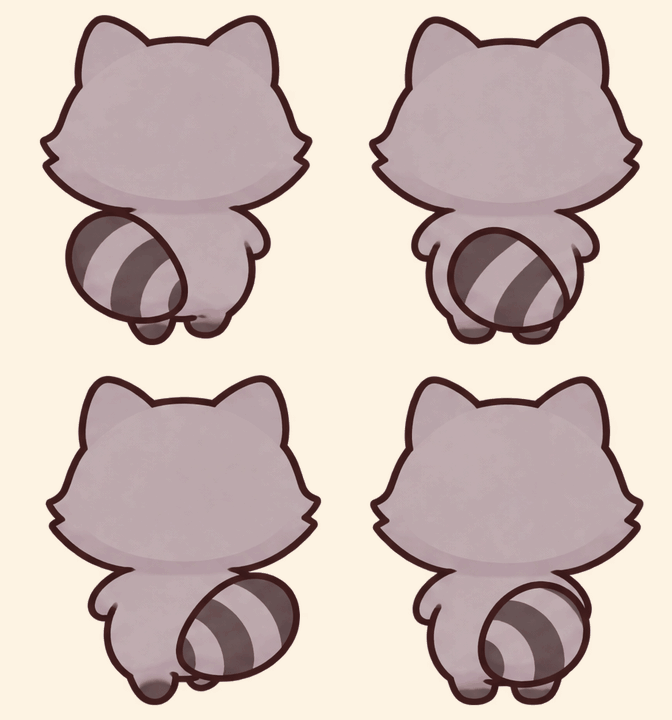
Before building anything, I made a few reference images to lock in the look: the raccoon, the pie, soft pastel colors, chunky outlines. That style sheet became the north star for everything after. Whenever something started drifting off-style, I went back to those first images and used them as the reference again.
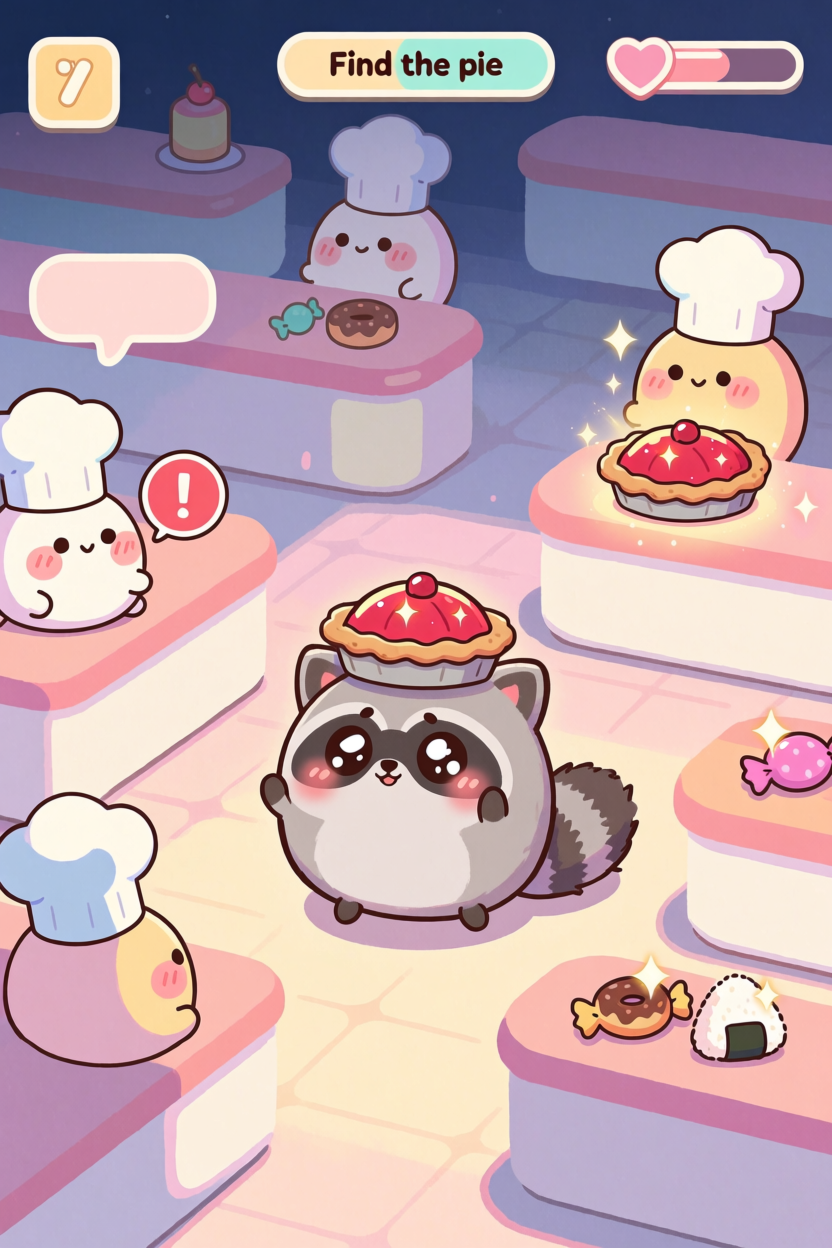
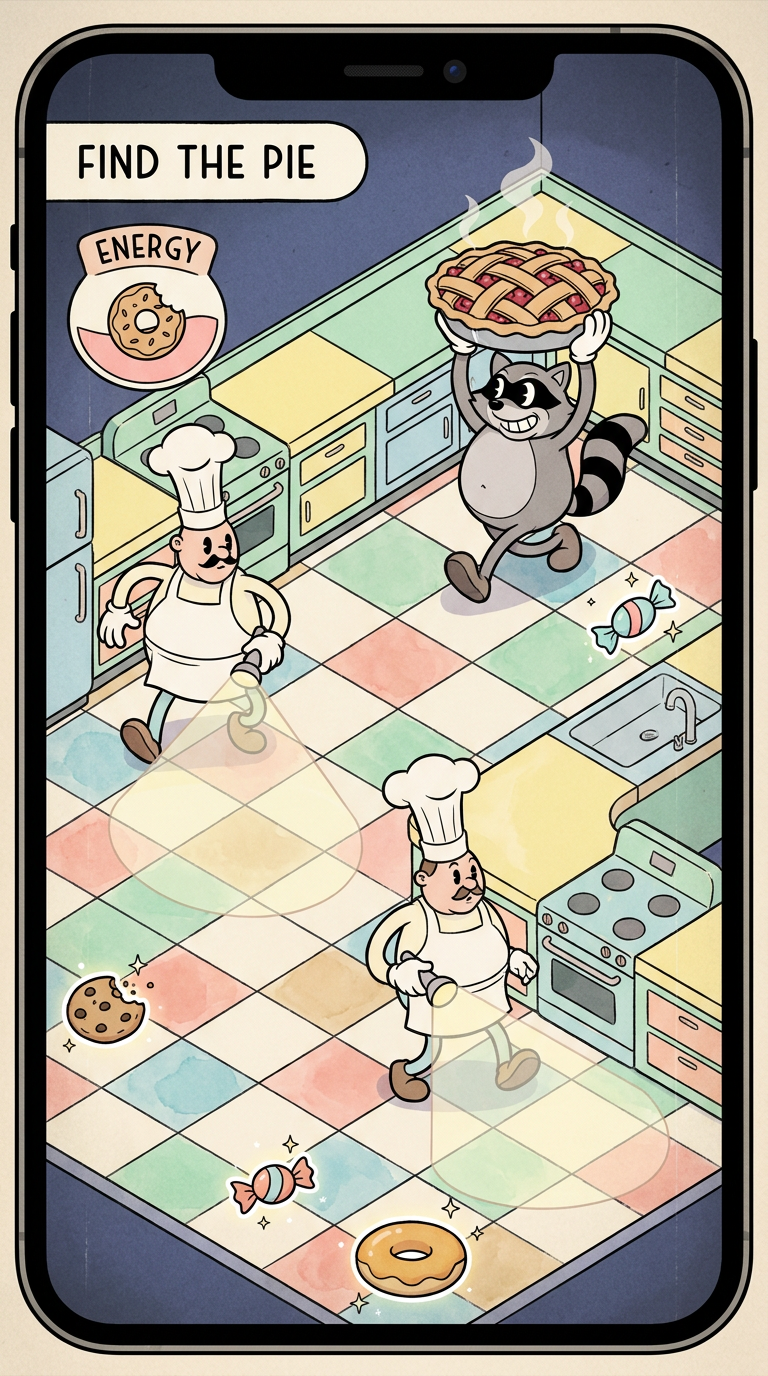
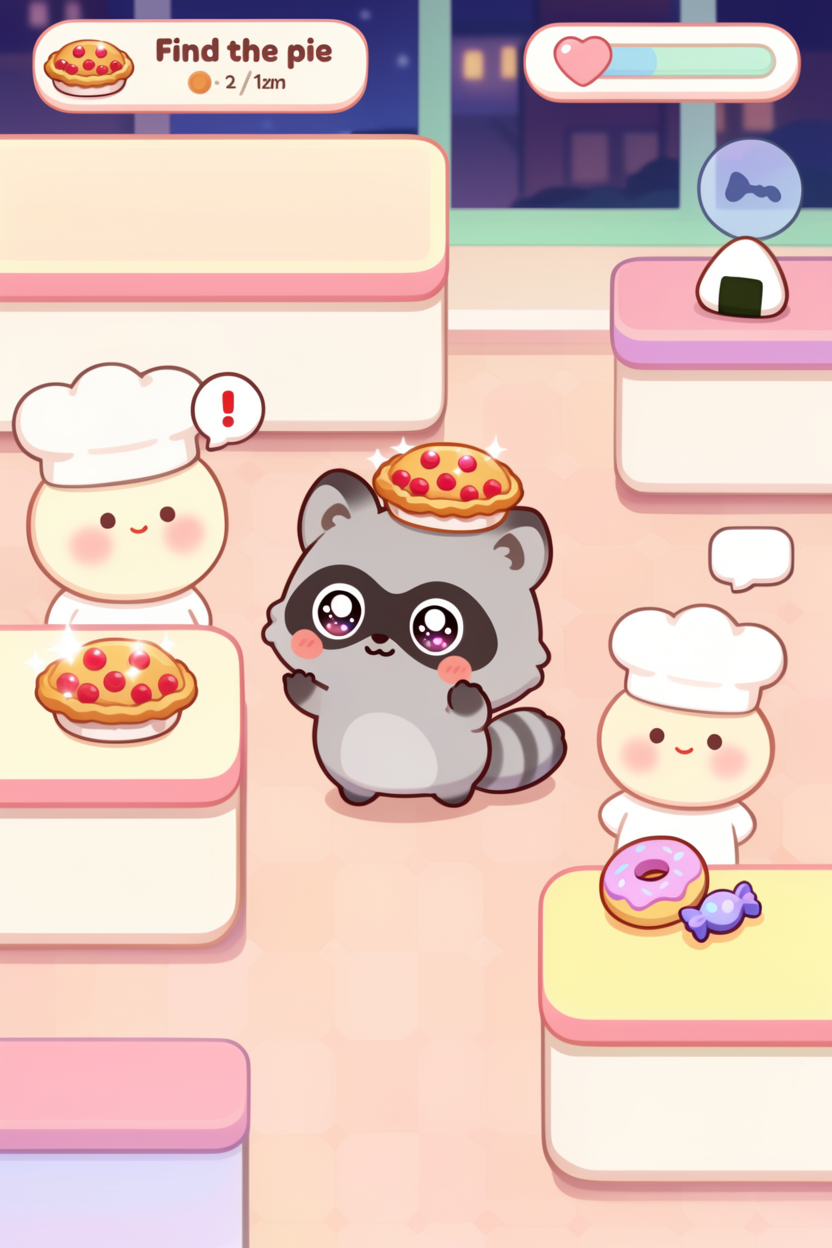
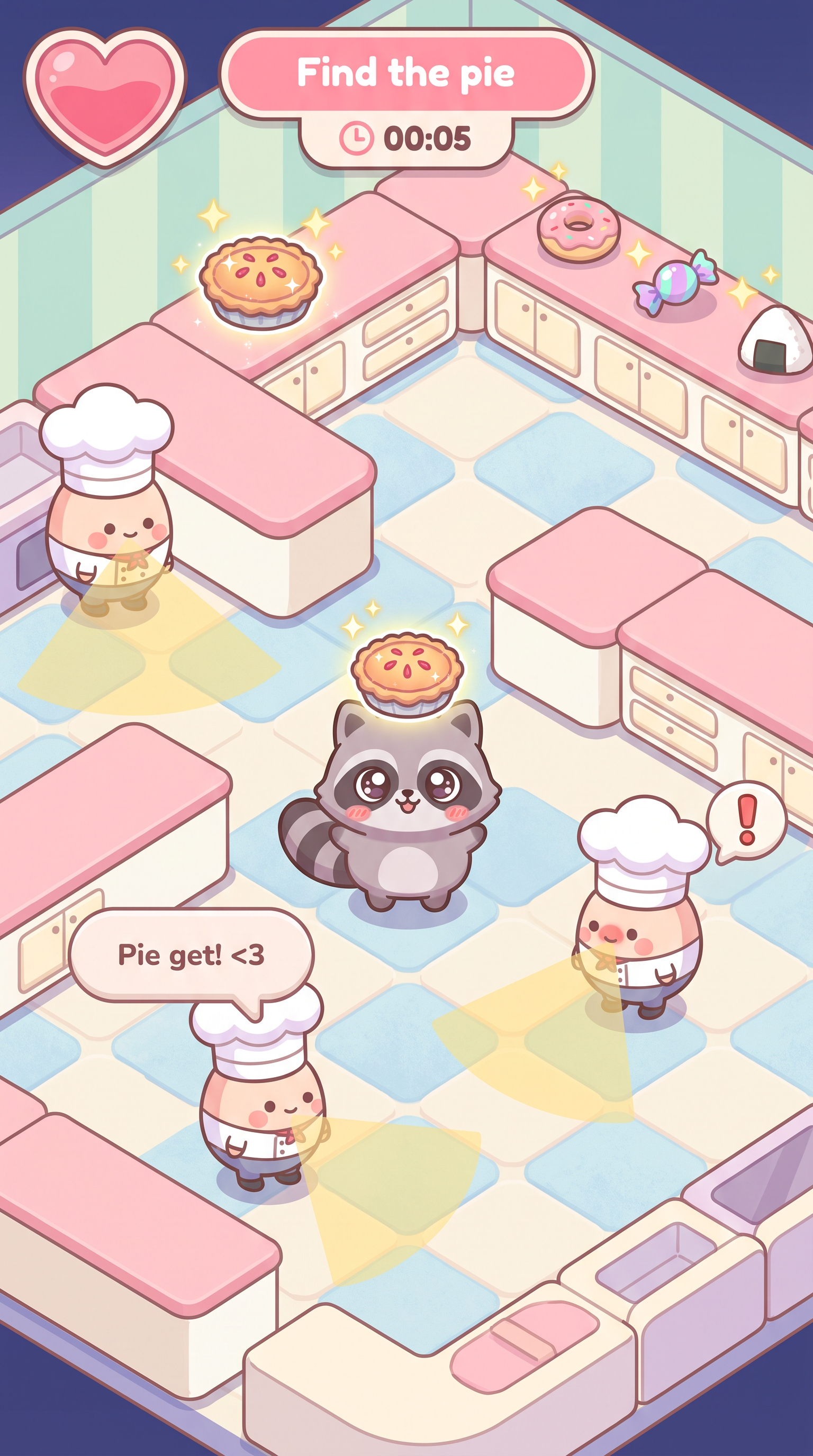
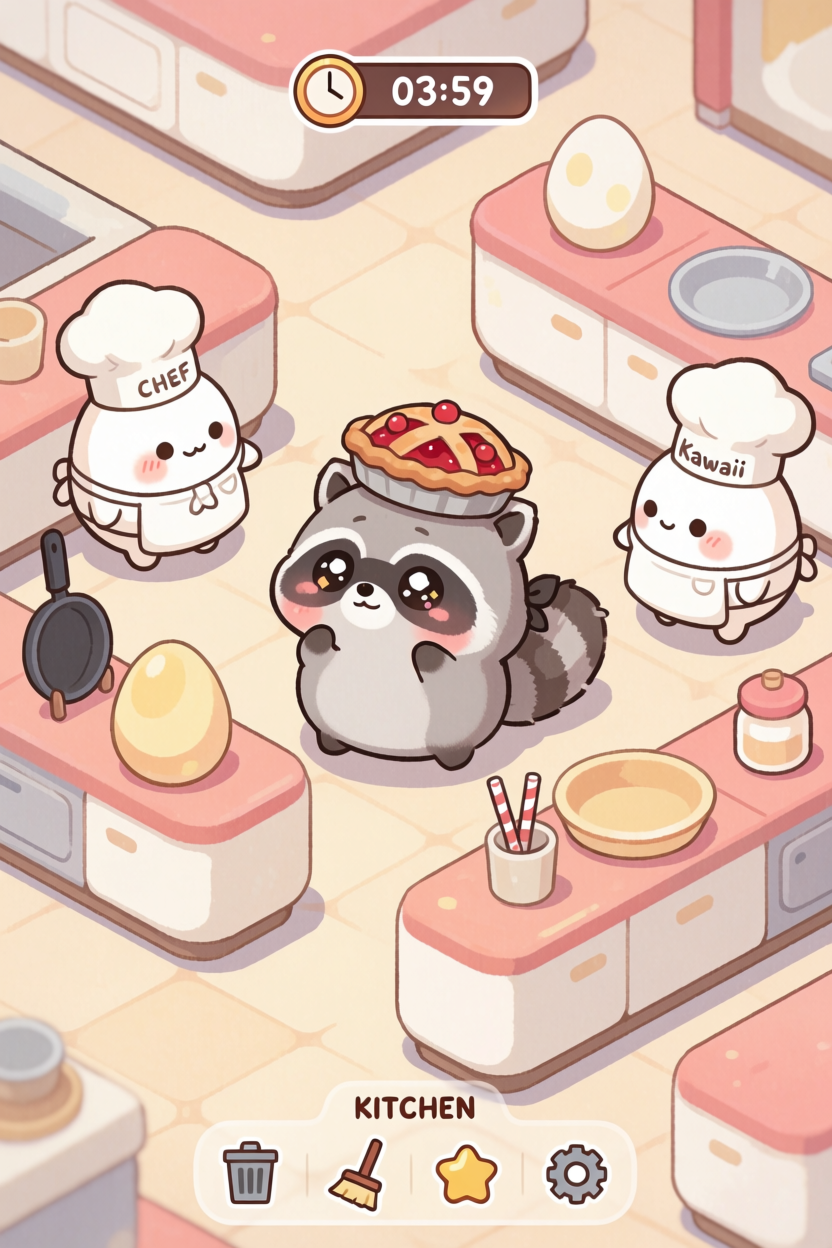
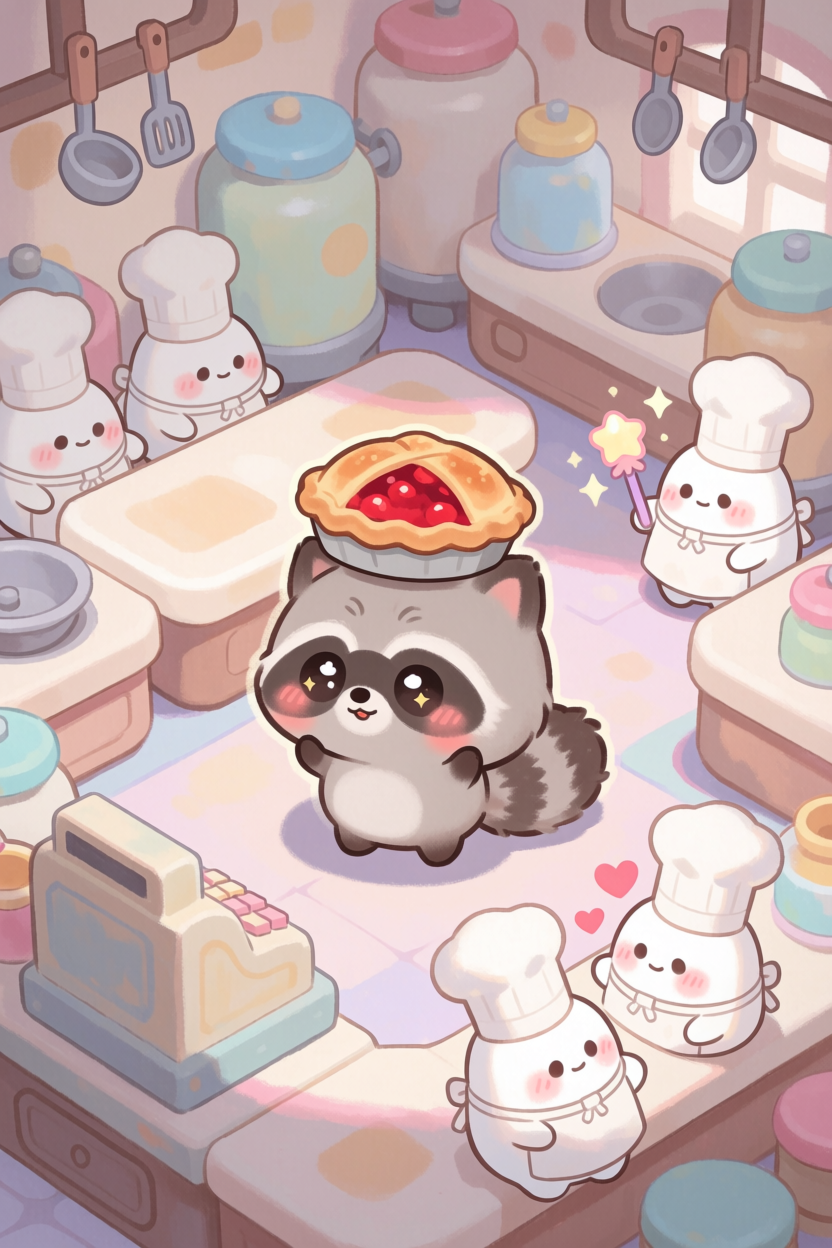
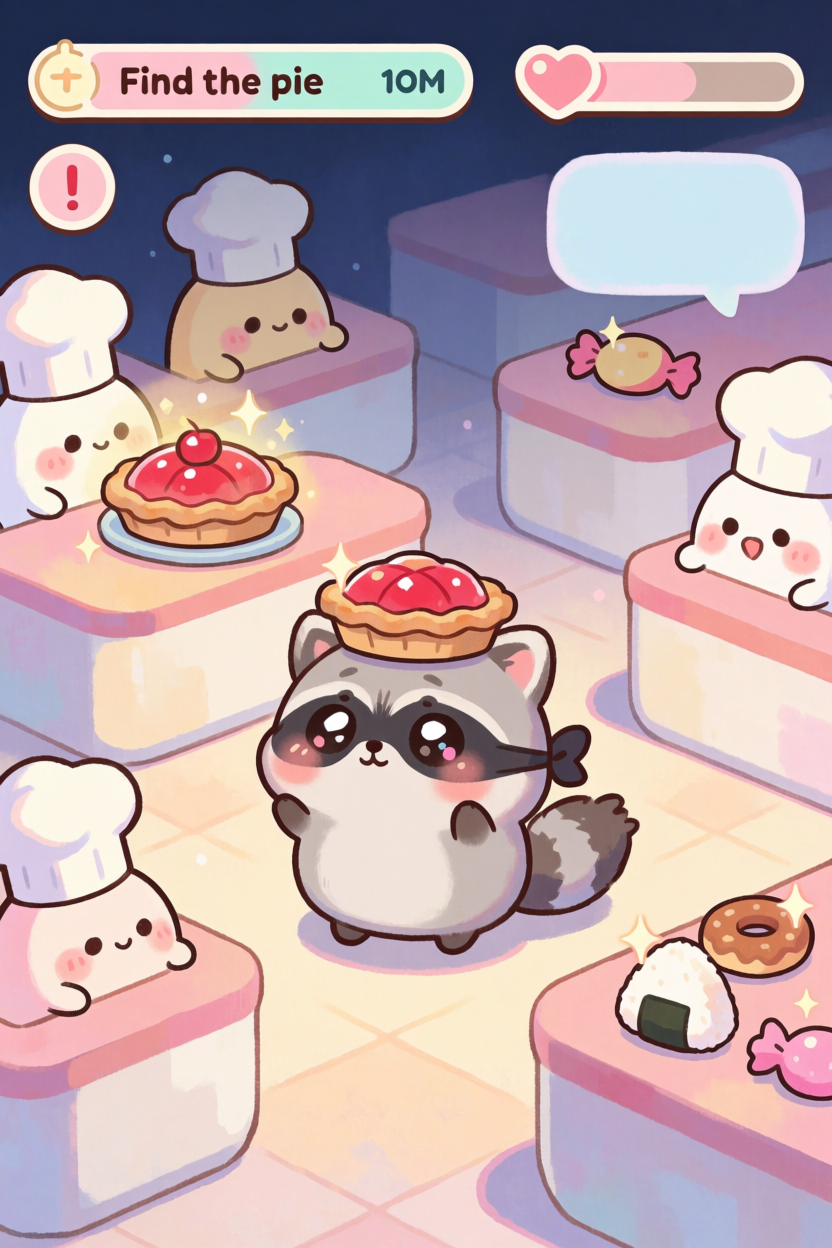
The game is a single web page that runs on your phone like an app. You can add it to your home screen and play anywhere. Claude did the coding while I played art director and tester. I'd describe what I wanted, play it, then say things like "the hiding spot is blocking the exit" or "the logs look weird," and we'd fix it and play again. It felt less like writing code and more like directing a tiny team.
The art, voices and music came from Krea AI. I generated whole sheets of sprites at once (raccoon poses, enemies, props, backgrounds), then cut them into little pieces the game could use. The characters talk too: the cooks, the bears and the ranger all have their own voice lines. There's music for the title screen, the game and each world, and I spent a surprising amount of time just balancing volumes so the music didn't drown out the voices.
There are three worlds so far. You start in a city kitchen and move out to the street, then head to a forest camp and a river, and finally to the Moon, with a pie base and a crater field. Each world has its own rules. In the forest, the bears are obsessed with honey, so if you break a honey jar they run over, start eating, and forget all about you. That's my favorite thing in the game.
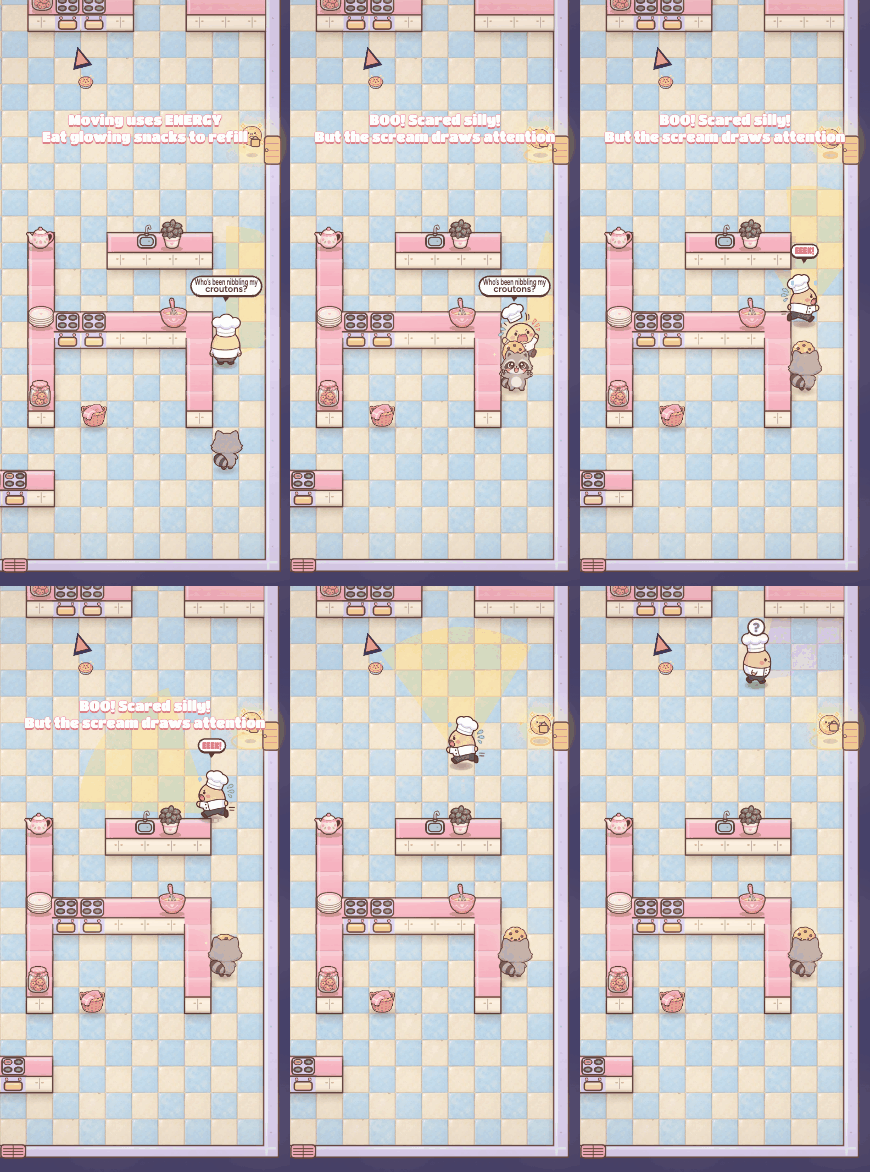
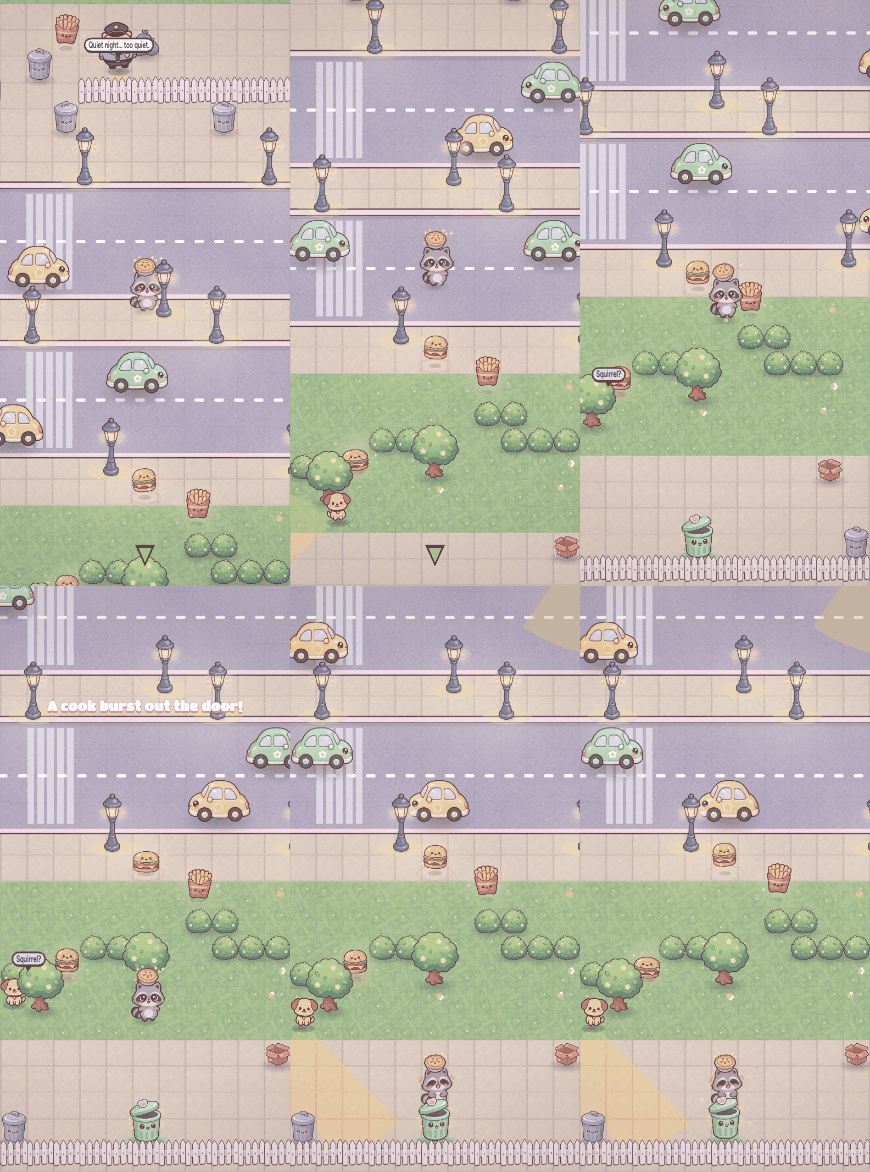
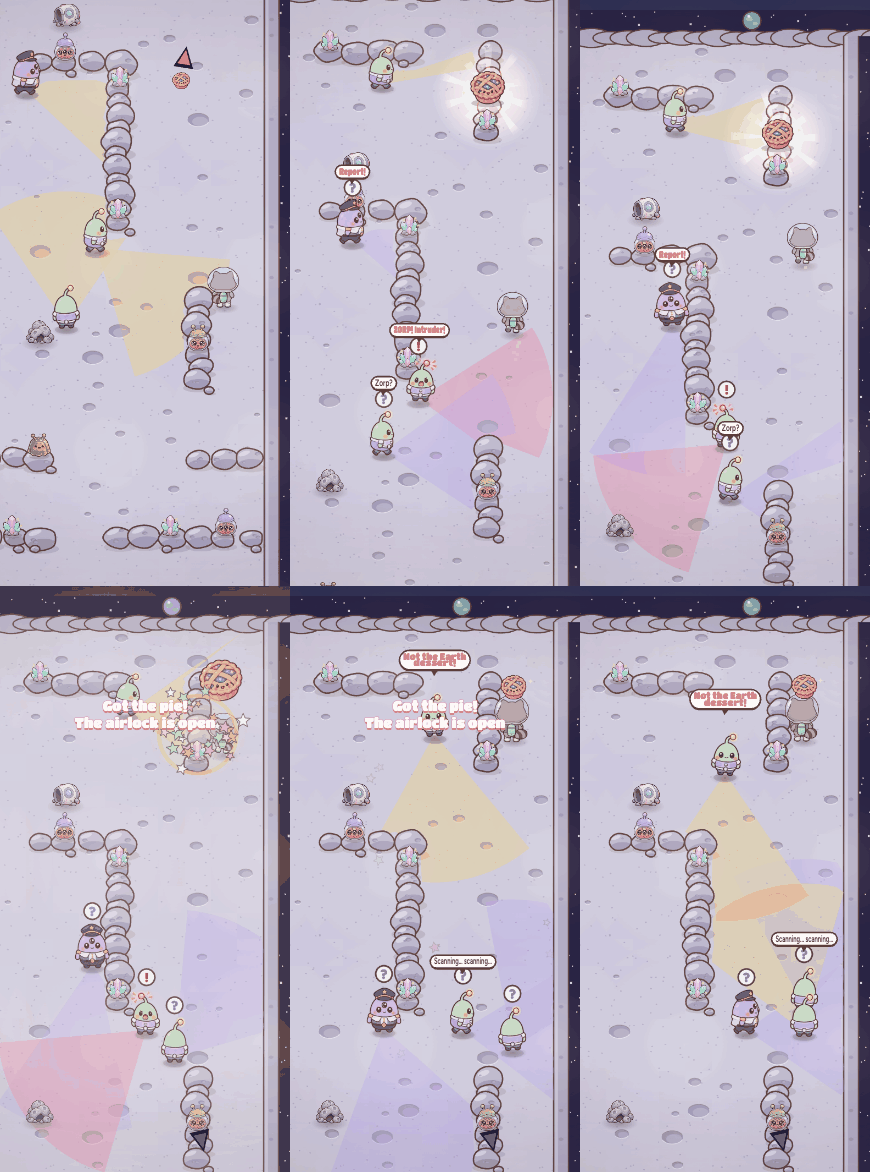
The most stubborn part was the forest map. The logs just wouldn't look right. We tried drawing them in code, then fixing the corners, then fixing the trees growing out of the middle, and eventually I said: let's stop drawing them and just use images. Now the walls are made of little log pieces and picnic tables. It looks better and it was less work, which is a pretty good lesson.
For testing, I had Claude run the game in an automated browser (Playwright) and take screenshots, so we could catch things like overlapping objects before I ever opened it on my phone. Everything lives on GitHub and is hosted with GitHub Pages, so every update is one push away.
What I took from it: AI is great for speed, but the taste still has to come from you. The reference images, the "no, not like that" moments and the playing it over and over are what made it feel like a real game and not a pile of generated stuff. And that's exactly the point of the new 90/10. Less time pushing pixels, more time deciding what's actually good.